
Your Voice Heard In The Crime & Policing Bill, The County Court branded “dysfunctional” and more…
In this weeks edition:
- Crime & Policing Bill Evidence Sessions
- Justice Committee New Report On Work Of The County Court
- Government Seeks Evidence on Modern Slavery Identification
- Preparing for Respect Orders: Factsheet Now Available
- Top Tip – The Victim Voice
- The Shift Has Started – 12 Weeks Till The #ASB11 Conference!
- Janine & Darren’s Weekly Round Up

Sector Voices Reflected in Crime and Policing Bill Evidence
The Justice Committee has published oral and written evidence sessions for the Crime and Policing Bill, and it’s encouraging to see that JUSTICE’s submission draws directly on insights from the ASB sector, including findings from the roundtable co-hosted by Green & Burton and the practitioner survey many of you supported.
In the early sections of the evidence, the Committee explores the ASB provisions in the Bill, with JUSTICE raising key points around:
- The need for stronger oversight of how ASB powers are used
- Concerns around information-sharing and victim access to support
- The importance of clearer guidance and practitioner input in implementation
Many of the points raised in JUSTICE’s evidence reflect the same concerns that came through in our roundtable and practitioner survey.
We’d like to extend a thank you to all who took the time to attend or share their views. Your input is helping shape the national conversation on ASB reform.
Read the full document:
Justice Committee Brands County Court System 'Dysfunctional'
The Justice Committee’s newly published report Work of the County Court sets out a damning picture of the civil justice system in England and Wales, with significant implications for ASB professionals.
Described as the “Cinderella service” of the justice system, the County Court is responsible for hearing a broad range of civil matters, including anti-social and behavioural injunctions. But the Committee found that the system is facing:
- Severe delays. Small claims now take over 50 weeks on average to reach trial
- Chronic underfunding. Court buildings are in disrepair and digital systems are failing
- Limited accessibility. Both professionals and litigants-in-person struggle to navigate the process
- Regional disparities. A postcode lottery means justice is harder to access in some areas than others
The report calls for a full root and branch review of the County Court, echoing long-held concerns from within the ASB sector. For many, it confirms what has been known on the ground for some time: that civil enforcement is becoming slower, harder to access, and less able to support community safety. You can read the full report here
Government Seeks Evidence on Modern Slavery Identification – ASB Sector Perspectives Needed
The Home Office has launched a call for evidence on the identification of victims of modern slavery. It aims to improve how frontline services spot the signs and respond effectively, particularly during early contact with professionals in policing, housing, health, and local government.
For ASB professionals, this is highly relevant. Vulnerability, coercion and exploitation are often uncovered during the course of tenancy enforcement, nuisance investigations, or safeguarding referrals.
The government is seeking input from those with:
- First-hand experience of identifying potential victims
- Knowledge of barriers to recognition or referral
- Insight into partnership working across sectors such as housing and enforcement
This is a chance to shape future policy and training that will affect how victims are supported and how risks are escalated across services.
The deadline to respond: 25 August 2025 – Read the full briefing and submit your evidence here

Preparing for Respect Orders: Factsheet Now Available
To close out the recent ASB Awareness Week 2025, Janine Green and Sarah Bradley from Consilium Training and Support hosted a practical session on the proposed Respect Order, a new civil-criminal hybrid tool currently outlined in the Crime and Policing Bill.
Although the legislation is still making its way through Parliament, the session encouraged teams to look ahead and consider how Respect Orders could sit alongside or even replace existing ASB injunctions.
Key areas covered included:
- The mandatory risk assessment and what it must include
- How breaches would be enforced and what evidence will be required
- Positive requirements, supervision duties and the new warning process
- Early steps that landlords and local agencies can take to prepare
To support the session, Green & Burton have produced a factsheet summarising the current version of the Bill and what the Respect Order could mean in practice.
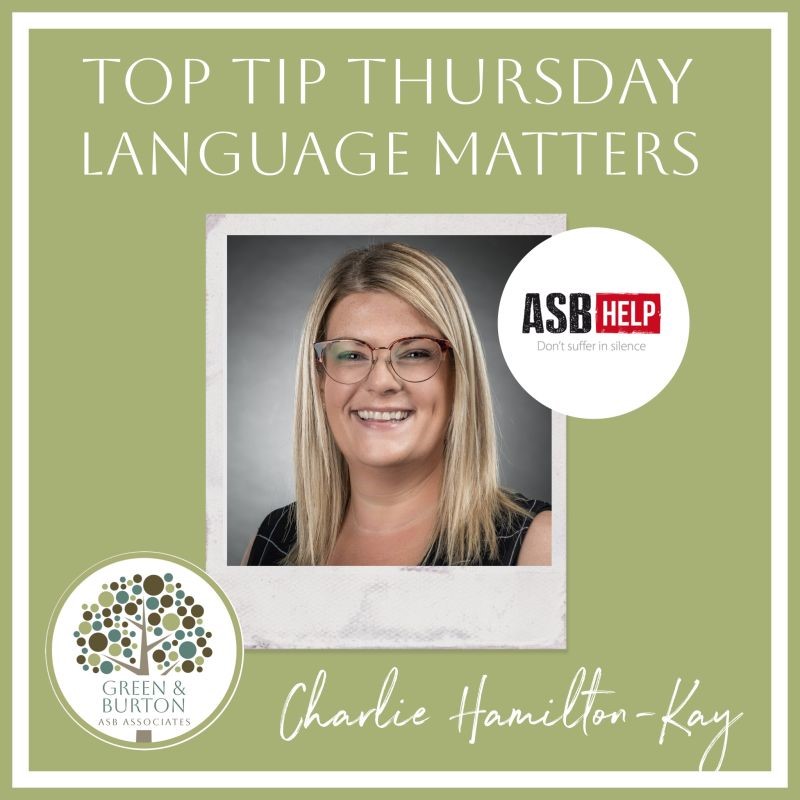
Top Tip: Language Matters
For victims of ASB, the experience doesn’t end with the incident itself. It often continues in how they’re spoken to, how cases are recorded, and how they’re made to feel when they ask for support.
This weeks top tip from Charlie Hamilton Kay at ASB Help is an important one:
“Language has impact too! The words we use matter. Consider how we describe cases, individuals and behaviours.
Dismissive, glib or defensive language can alienate victims of ASB, reenforcing a sense of not being listened to, that they’re not important. Recognise that empathy and respect are crucial when dealing with victims and put yourself in their shoes.
Anyone can be fighting a battle we know nothing about, we should never be another challenge for them to face.”
It can be easy to get lost in policy, procedure and process – leaving the victim out of the picture. The team at ASB Help work to keep victim voice front and centre, and we’re delighted that Charlie is not only joining the panel at our Liverpool Fringe Event in September, but also joining us for two sessions on The Victim Voice and The Art Of Communication at this year’s upcoming #ASB11 Conference in October.
ASB Help have recently published their Practitioners Communication Guide “‘It’s not just ASB: Why language matters when supporting victims’ – which we have been proud to contribute to. This is an essential read for all ASB professionals and you can download it here.
The Shift Has Started – 12 Weeks To Go!
ASB is changing. Be part of shaping what comes next.
The #ASB11 Conference is taking place on the 14th October 2025 and with the official countdown now fully underway, the energy around collaborative working has never felt more timely.
Across the sector, we are seeing a need for a move away from siloed responses. From housing and enforcement to community support and legal services, organisations are needing to work together in more intentional, joined-up ways to create improved and sustainable outcomes. That shift is not just about structure. It is about mindset, trust and shared purpose.
This year’s conference programme is designed to reflect that reality. Our overall theme for the event is Partnerships – sessions will bring to life some of the real challenges and opportunities of working across agency. Whether that means navigating information sharing, managing competing priorities, or building a shared understanding of risk and responsibility, the focus is firmly on what works in practice.
An updated programme is now available on our website detailing all of the sessions, speakers and sponsors (with new sponsors to be announced shortly too!).
If you are planning to attend but haven’t booked your place yet, now is the time to secure your early bird pricing.
The logistics:
Date: 14 October 2025
Venue: thestudio, Birmingham
Time: 9.30am to 6.00pm – including a charity drinks reception at the end of the programme!
ASB is changing. This is your opportunity to help shape what comes next. Also… Check your inbox each Friday starting this week for special conference updates with behind-the-scenes insights, speaker highlights and practical prep as we count down to 14 October.
Janine & Darren’s Weekly Round Up
With the recent publications featured in this weeks newsletter it is clear that there is a real focus on whether the systems we rely on are working as they should.
From the evidence sessions on the Crime and Policing Bill to the Justice Committee’s findings on the County Court, the message is consistent. Powers and policies are only as effective as the structures behind them. When those structures fall short, it becomes harder to protect communities and support those most affected by ASB.
This is exactly why partnership working continues to be so important. When the process gets complex or capacity is stretched, strong local relationships and joined-up thinking often make the difference.
It has also been a reminder of just how much the sector has contributed over the past year. The insights shared through the practitioner survey and roundtable have helped shape national conversations, and the focus on Respect Orders this week has shown just how engaged professionals are in looking ahead and preparing for what is coming.
The countdown to the #ASB11 Conference is now well and truly on. With 12 weeks to go, planning has kicked up a gear and the programme is now starting to take real shape. We’re pulling together sessions that get to the heart of what’s shifting in the sector and what it takes to turn good partnership working into something that sticks. That early bird pricing is only valid until the end of the summer so secure your tickets at the best rate while you can – an invoice option is available at checkout if required. Get your tickets here.
And finally – a quick reminder that Darren is hosting a free lunchtime webinar next Tuesday 29 July at 12.30pm. He’ll be joined by guest expert Jon Bull to explore how we can move from recommendation to action when reviewing ASB cases, using person-centred approaches that lead to real change. You can register to attend here.
Have a great week,
Janine & Darren