
New Housing Ombudsman Resources & More For Your Weekly Update…
In this edition:
- ASB In the News
- Crime & Policing Bill Factsheets
- New Housing Ombudsman Resources
- “No More Week” Domestic Violence Awareness with Dr Kelly Henderson
- Scotland – Independent Working Group on ASB Releases Comprehensive Report
- Launching Our Case Study Programme
- The Top Tip Section
- Janine and Darren’s Round Up
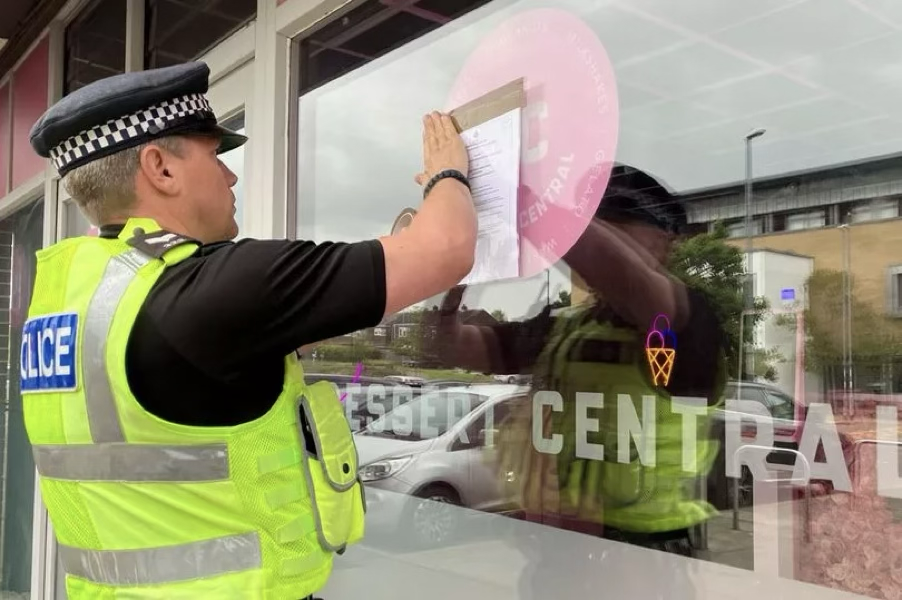
ASB In The News – Cases Making Headlines This Week
From closure orders and dispersal powers to community-led prevention work, this weeks headlines highlight the ongoing challenges and responses to ASB in communities up and down the country. This week’s stories hitting the news:
Wolverhampton: Police patrols stepped up at a Wolverhampton retail park after reports of ASB. Read Now
Newcastle-under-Lyme: Town centre crime and ASB fall again, thanks to targeted prevention work. Read Now
Ryedale: Several areas report an increase in ASB, sparking fresh concerns. Read Now
Banbury: Local MP backs action to tackle town centre ASB. Read Now
Burnham-on-Crouch: Police increase patrols to respond to growing ASB concerns. Read Now
Ipswich: Rise in ASB-linked evictions highlights the need for strong case management. Read Now
Tenby: ASB at a multi-storey car park prompts swift police action. Read Now
Isle of Man: Onchan Commissioner suggests restorative justice could help address ASB. Read Now
Burnley: Stronger measures to tackle ASB come into effect from 3rd March. Read Now
St Helens: Police respond swiftly to reports of disorder. Read Now
Finedon: Greatwell Homes evicts tenant after repeated ASB complaints . Read Now
Solihull: Special powers introduced to help curb ASB in key areas. Read Now

Crime and Policing Bill 2025 – Factsheets Published
Following on from our comprehensive update last week, the government has now published a set of official factsheets providing further detail on the key proposals within the Crime and Policing Bill 2025.
These factsheets cover a wide range of areas, including the introduction of new Respect Orders, Youth Injunctions, and Housing Injunctions, as well as the extension of Closure Powers to social landlords, and changes to the ASB Case Review process.
While the factsheets offer useful clarification on the what, there is still a long way to go in understanding exactly how these changes will play out in practice — particularly in terms of multi-agency working, victim support, and how these powers will sit alongside existing ASB tools and processes.
If you haven’t yet seen the factsheets, they are available to view here:
As the Bill progresses through Parliament, we’ll continue to keep you updated, and as always, we’re here to support you in preparing for the changes ahead. Drop us an email at janine@greenandburton.co.uk or darren@greenandburton.co.uk.

Housing Ombudsman Publishes ASB Learning Resource
The Housing Ombudsman has re-launched it’s dedicated ASB Topic Page as part of its Centre for Learning – providing a single point of access for landlords, officers, and sector professionals to improve their understanding and handling of ASB cases.
This new resource brings together key reports, case studies, and learning points from real complaints investigated by the Ombudsman. It highlights recurring themes where landlords fall short, including poor communication, delays in case handling, and failure to properly assess risk and vulnerability.
The page also offers practical tools to help social landlords reflect on their approach, review their policies, and embed best practice into their case management processes.
You can access the resources here:
ASB Topic Page – Housing Ombudsman
This is an essential resource for any organisation managing ASB cases, offering valuable insight into what good looks like – and where things can go wrong.

No More Week – Raising Awareness Of Domestic Violence
This No More Week 2025, we are privileged to collaborate with Dr Kelly Henderson, Founder and Managing Director of Addressing Domestic Abuse C.I.C, to shine a light on the crossover between ASB and domestic abuse.
Together, we’ve explored how domestic abuse can present as ASB, the challenges victims face when their experiences are misidentified, and what ASB professionals can do to ensure they are safeguarding victims while tackling community harm.
As ASB practitioners, we have a crucial role to play in recognising these hidden forms of harm – understanding the signs, asking the right questions, and ensuring our interventions don’t unintentionally place victims at greater risk.
Scotland - Independent Working Group on ASB Releases Comprehensive Report
The Scottish Government’s Independent Working Group on ASB has published a detailed report examining current approaches to addressing ASB in Scotland. The report offers strategic recommendations aimed at fostering safer communities through prevention and early intervention.
Key Findings:
- Demographic Insights: Contrary to common perceptions, the report reveals that individuals over the age of 30 constitute the majority of those receiving police warnings or criminal convictions for ASB, challenging the stereotype that ASB is predominantly a youth issue.
- Impact on Victims: ASB incidents, especially those occurring in residential settings, have significant long-term effects on victims, including mental and physical health challenges, financial difficulties, and strained personal relationships. A notable correlation exists between ASB and other crimes, such as disability hate crimes.
Recommendations:
- Preventative Measures: Emphasise investment in youth work and mental health services to address underlying causes of ASB.
- Policy Revisions: Advocate for a review of housing allocation policies to enhance community cohesion and reduce potential ASB triggers.
- Multi-Agency Collaboration: Encourage a coordinated approach among various agencies to ensure comprehensive support for both victims and perpetrators, facilitating effective interventions.
The report underscores the necessity of addressing ASB through a holistic lens, considering broader social and economic factors such as poverty and inequality. It calls for sustained investment in community services and the implementation of supportive, developmental interventions over punitive measures. Robust data collection, analysis and information-sharing systems must be developed to address significant gaps and enable proactive, place-based interventions
For a deeper understanding and to access the full report, visit the Scottish Government’s publication:

Shine a Light on Your ASB Work – Introducing Our Case Study Programme
At Green & Burton ASB Associates, we know that some of the most valuable lessons come from real-world experiences. That’s why we’re excited to launch our Case Study Programme, inviting ASB professionals from across the sector to share their success stories, challenges overcome, and innovative approaches to tackling ASB.
We want to showcase the incredible work being done on the ground – from creative problem-solving to impactful partnership working – helping to spread best practice and inspire others across housing, community safety, and enforcement teams.
What are we looking for?
- Creative solutions that made a difference
- Examples of positive outcomes for victims and communities
- Cases where strong partnership working led to success
- Lessons learned from complex or challenging cases
If you have a case you’re proud of, we’d love to feature it. To get involved, simply visit our website to complete the case study submission form – it’s quick and straightforward to fill out. Let’s work together to shine a light on the best of ASB practice, and you can gain a complimentary place on one of our training programmes in exchange for you sharing your expertise.
The Top Tip Section
Every week on our LinkedIn page we share a top tip to help you or inspire new thinking in your role… We thought that it would be useful to share those tips here with you, so first up we have this insight from partners Janine & Darren…
Top Tip: Removing Bias from ASB Investigations
Ensuring our investigations are free from bias is crucial to making fair, evidence-based decisions that are appropriate to each case. But the reality is that everyone has unconscious biases – it’s just how our brains work.
“For many of us, the word bias comes with negative connotations and we would like to think we don’t have them. Truth is, everyone does and it’s the natural way our brain works.
The human brain receives around 11 million bits of information per second, yet our conscious mind can only process roughly 40-50 bits per second. This means most of the information our brain receives is processed unconsciously, and our brain creates shortcuts to process information faster and keep us safe.
For example, if we see a tiger in front of us, we need to respond immediately for survival. If our brain had to analyse the colours, shapes, and sounds in front of us and take the time to conclude it was a tiger, we might already have been attacked!
Unconscious bias comes from these shortcuts and is formed through our experiences. If you felt bullied at school by a particular teacher who had a beard, you may now unconsciously feel unsafe or have negative views towards anyone with a beard who reminds you of that teacher.
We don’t want any unconscious biases to impact our casework – but what can we do when they are “unconscious”?
– Work to recognise your unconscious biases – Online tests can help, or take time to reflect on which types of people challenge you the most. Do they share common traits that could indicate an unconscious bias?
– Create pauses in your decision-making – Before finalising an outcome, take a step back and consider alternative possibilities. Have you explored all angles, or has an unconscious assumption influenced your thinking?
– Challenge your thinking – Use case supervisions, peer discussions, or reflective practice to bring in alternative views. This can help ensure you haven’t formed conclusions based on bias rather than fact.
This is particularly relevant in ASB casework, where previous reports or history can influence perceptions. A recent case example highlighted how someone with past ASB reports (even if historic and unrelated) was automatically viewed as the wrongdoer before facts were fully established. This highlights why fairness and objectivity must be at the heart of investigations.”
At Green & Burton ASB Associates, we offer training on unconscious bias in ASB case management, exploring its impact, where it shows up, and how to mitigate its influence. This is available as in-person training or through a flexible e-learning module.
Janine & Darren’s Weekly Round Up
This week has been a real reflection of how fast things are moving in the ASB landscape and just how much there is for practitioners to stay on top of!
With the Crime and Policing Bill officially making its way through Parliament, it’s clear that the government is keen to be seen as taking firm action on ASB. But as we’ve discussed with many of you, the practical reality of how these proposed powers will land – and how they fit with existing tools – is far from clear. That’s exactly why our upcoming roundtable with JUSTICE feels so important; we need the voice of frontline professionals to help shape what happens next.
The Housing Ombudsman’s new ASB resources have also sparked conversation this week, with a clear message that poor case handling and missed opportunities for early intervention are still recurring issues across the sector. For us, this reinforces that getting the basics right – from triaging reports correctly to effective communication with victims and clear record keeping – has never been more important.
We also want to highlight the work happening around No More Week, particularly the crossover between ASB and domestic abuse. Collaborating with Dr Kelly Henderson to explore this topic has been a real eye-opener and a reminder that, in ASB case management, we can’t afford to operate in silos. Being alert to hidden harms and ensuring our processes support safeguarding is absolutely essential.
This week we are excited to officially launch our Case Study Programme. This is all about capturing the incredible work happening across the sector from leaders and practitioners like you – sharing the creative problem-solving, the partnerships that make a difference, and the lessons learned when things don’t go to plan. We’d love for you to be part of it, so do visit the website to get involved.
Have a great week,
Janine & Darren