
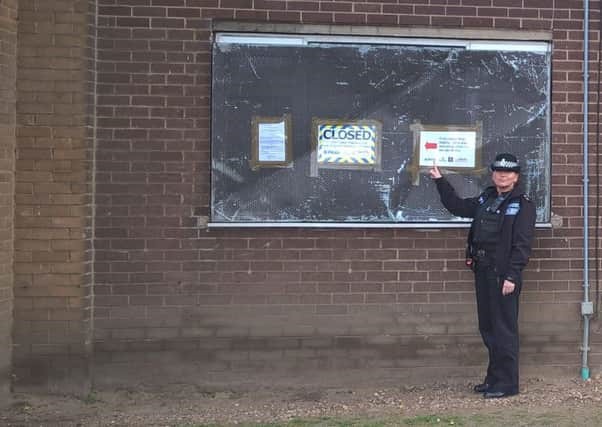
37 Closure Orders, One Estate, One Outcome: Restoring Safety on Balby Bridge
Residents on the Balby Bridge estate in Doncaster had been living with persistent disruption across multiple blocks. Communal areas were being used for drug taking, drinking, sleeping and sexual activity. People who did not live there were coming and going at all hours. Paraphernalia was being left behind and the atmosphere in stairwells and entryways felt unpredictable and uneasy.
This was not an issue contained to one or two blocks. When incident data was mapped, more than half of the 37 blocks on the estate showed ongoing problems. Balby Bridge is a geographically contained estate, surrounded by three main roads with no through traffic. Without an estate-wide response, the behaviour would simply have shifted from one block to another.
To understand how such a large-scale intervention was achieved, Green & Burton ASB Associate Katy Anderson spoke with Karl Chapman, Safeguarding and ASB Service Manager at St Leger Homes, who coordinated much of the work behind securing closure orders across the affected blocks. This is how the intervention was planned, delivered and sustained.
What Had Already Been Tried
Before pursuing closure orders, St Leger Homes had already taken steps that most housing providers would recognise:
- Tenancy warnings and conversations about block access
- Messaging around tailgating and secure entrance points
- Injunctions where individuals could be identified
- Strengthened CCTV and concierge presence
- Joint working with police
- Outreach support through drug and alcohol services
- Housing support for those rough sleeping where relevant
These actions brought some limited improvements, but the wider environment remained unchanged. The challenge was that the behaviour driving the harm was transient and dispersed. There was no single perpetrator or organised group controlling the activity. It was a rolling pattern of people using the estate in ways that undermined safety and stability – often harder to disrupt than one identifiable source of harm.
Why an Estate-Wide Closure Strategy Was Necessary
The geography of the estate was key. Because Balby Bridge is contained, tackling just a few blocks would likely have pushed behaviour into others. With over half the blocks showing evidence of harm, St Leger Homes recognised that a whole-estate approach was the only credible route to reducing risk and restoring confidence.
As an ALMO, St Leger Homes could not make the closure applications directly, but they led the preparation, evidence gathering and coordination. Doncaster Council acted as the applicant, with police involvement built in from the outset.
Police involvement was not an afterthought – it was a joint and welcomed approach across agencies. The police played their part in gathering evidence for the application and continue to monitor activity to ensure the orders remain effective. Officers now work alongside concierge staff who monitor CCTV and alert police to breaches as they occur, allowing for swift responses and, where necessary, arrests.
Between April and September, more than 300 communal area incidents were recorded. In the weeks after the closure orders were granted, that dropped to around 20.
Residents reported a marked improvement in how safe they felt on the estate, which in turn has increased satisfaction and confidence in the agencies involved.
Practical Challenges and On-the-Ground Problem Solving
Shortly before the hearing, the court determined that each block counted as a separate premises. This meant there would be 37 separate orders, which increased costs significantly, but the work continued, and all orders were granted.
Afterwards, some notices were removed from blocks. To prevent individuals later claiming they were unaware of the orders, St Leger Homes commissioned metal signage that cannot be easily taken down. These operational details may seem small, but they are often what make legal interventions hold.
Sustaining the Change
St Leger Homes are now preparing an extension application and have built a long-term plan with partners to embed improvements:
- Daily block checks
- Strengthened CCTV monitoring by concierge
- Joint patrols with police and plain-clothes activity
- Injunctions and proportionate tenancy enforcement where evidence thresholds are met
- A dedicated police officer for the estate
There has been no displacement into the city centre. This was monitored deliberately. The individuals causing harm on Balby Bridge differ from those linked to town centre issues, which are managed through a separate PSPO in place for the city centre.
Key Learning
- Estate geography shapes displacement risks. Where an estate is physically contained, responses need to reflect that reality.
- Closure orders work best when policing is embedded at the planning stage, not added afterwards.
- Communal areas are not neutral spaces – when they feel unsafe, the emotional toll on residents is significant.
- Closure orders can reset conditions, but only sustained inspection, tenancy work and coordinated enforcement keep the gains in place.
The Balby Bridge intervention shows what is possible when a landlord leads confidently, understands its environment and works in step with police and local authority partners. It demonstrates that safety and trust can be rebuilt, even where they have been worn away over time.
Thank you to Karl Chapman and St Leger Homes for sharing this case study with us.
Do you need help with persistent ASB affecting your tenants? Reach out to see how we can support your organisation.