
ASB in practice: What recent case studies tell us about thresholds, tools and decision making
Over January, we shared a series of ASB case studies drawn from real situations across the country. Taken individually, each case highlights a specific tool or approach. Viewed together, they offer something more useful: insight into how ASB practice is evolving, and what is increasingly expected of practitioners.
From hotspot policing in Cornwall, to borough-wide PSPO proposals in Camden, closure orders in Kent and a Criminal Behaviour Order in Bristol, a number of common themes emerge around judgement, proportionality and the use of enforcement powers.
This article draws out those themes and reflects on what they mean for ASB and community safety professionals.
Hotspot policing: visibility is not the intervention
The Cornwall hotspot policing case is a useful reminder that visibility alone is not the intervention. While the delivery of over 45,000 additional patrol hours sounds significant, what mattered most was how those patrols were targeted and supported.
Activity was driven by local intelligence and community reporting, not blanket enforcement. Closure orders, PSPOs and preventative education in schools were used alongside patrols, recognising that not every problem requires a criminal justice outcome.
For practitioners, the learning here is clear. Hotspot policing works best when it is:
- intelligence led
- locally informed
- supported by a range of tools
- delivered in partnership rather than isolation
This is about precision, not presence for its own sake. You can read the full article on the case here.
Borough-wide PSPOs: setting boundaries, not blanket bans
The proposed borough-wide PSPO in Camden highlights a different kind of challenge. Rather than responding to a single hotspot or individual, this is a strategic attempt to manage alcohol-related ASB across an entire area.
What stands out is not the power itself, but how it is framed and implemented. The proposal focuses on irresponsible behaviour rather than criminalising all public drinking, includes a commitment to consultation, and explicitly links enforcement with referral routes for vulnerable individuals.
This reinforces several important practice points:
- PSPOs rely on legitimacy as much as legality
- Consultation is central, not optional
- Clarity around geography and jurisdiction matters
- Enforcement must sit alongside support
- Review points are critical to maintaining proportionality
For ASB teams, borough-wide controls demand particularly careful judgement. These are not quick fixes and their success depends on design, communication and follow-through.
Read the full article on Camden here.
Closure orders: creating space, not resolution
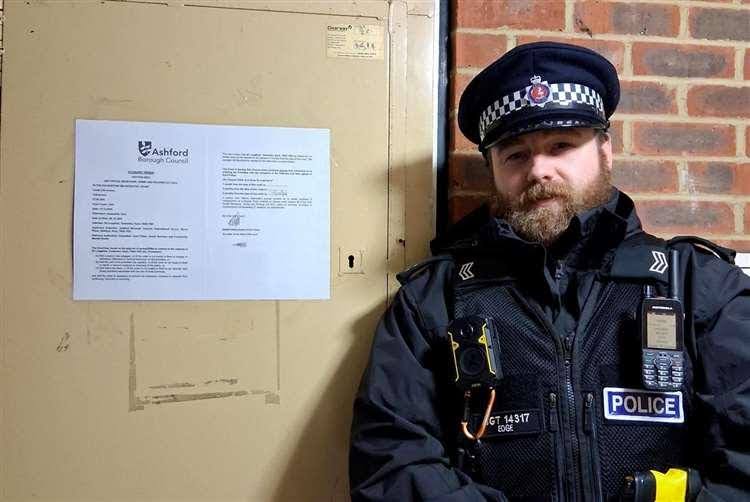
The closure order secured in Tenterden illustrates a common misconception about enforcement tools. Closure orders are often seen as an end point. In practice, they are a pause point.
The order created immediate stability and stopped harm, but the case also shows the importance of what happens around the order. Police presence, deployable CCTV, communication with neighbours and active oversight during the closure period all played a role in maintaining confidence and preventing displacement.
The key lesson here is that closure orders create space. What matters is how that space is used:
- Planning next steps while the order is active
- Recognising the wider impact beyond a single property
- Maintaining visibility and monitoring
- Preparing for what happens when restrictions lift
Enforcement does not remove responsibility. It shifts it. Read the full article here.
Criminal Behaviour Orders: escalation under scrutiny
The Bristol Criminal Behaviour Order banning an individual from Castle Park highlights an increasing scrutiny around escalation.
CBOs are not early intervention tools. This case attracted attention because of the length of the ban and the consequences attached to breach. What underpins its legitimacy is evidence: repeated behaviour, prior interventions and non-compliance.
Several practice reflections come through strongly:
- escalation must be clearly evidenced
- location-based restrictions can be effective when precisely drawn
- enforcement depends on partnership confidence
- public messaging shapes expectations
- enforcement should sit alongside prevention and support
Cases like this reinforce that proportionality is not about avoiding strong action. It is about being able to justify it. Read the full case here.
What these cases tell us about ASB practice now
Taken together, these cases point to a clear direction of travel.
ASB practice is increasingly judged not just on outcomes, but on how decisions are reached. Thresholds, evidence, proportionality, partnership working and communication are all under closer scrutiny.
Across all four cases, effective responses shared common features:
- A mix of tools rather than reliance on one measure
- Clear articulation of why a power was used
- Attention to legitimacy and community confidence
- Recognition of vulnerability alongside enforcement
- Active management beyond the point of legal action
The question for practitioners is no longer simply “can we use this power?”, but:
- Why this power
- Why now
- How it fits alongside other interventions
- And what happens next
These case studies reinforce that effective ASB work is rarely about a single intervention. Sustainable outcomes are driven by judgement, proportionality and the ability to combine enforcement, prevention and partnership working in a way that stands up to scrutiny.
As the legislative and policy landscape continues to evolve, the quality of ASB decision making will matter more than ever. Reflecting on real cases remains one of the most valuable ways for practitioners to test assumptions, challenge thresholds and strengthen practice.
If you would like to discuss any of the themes raised here in the context of your own ASB service, please get in touch.